10 Tips for Getting Through Your First Deployment
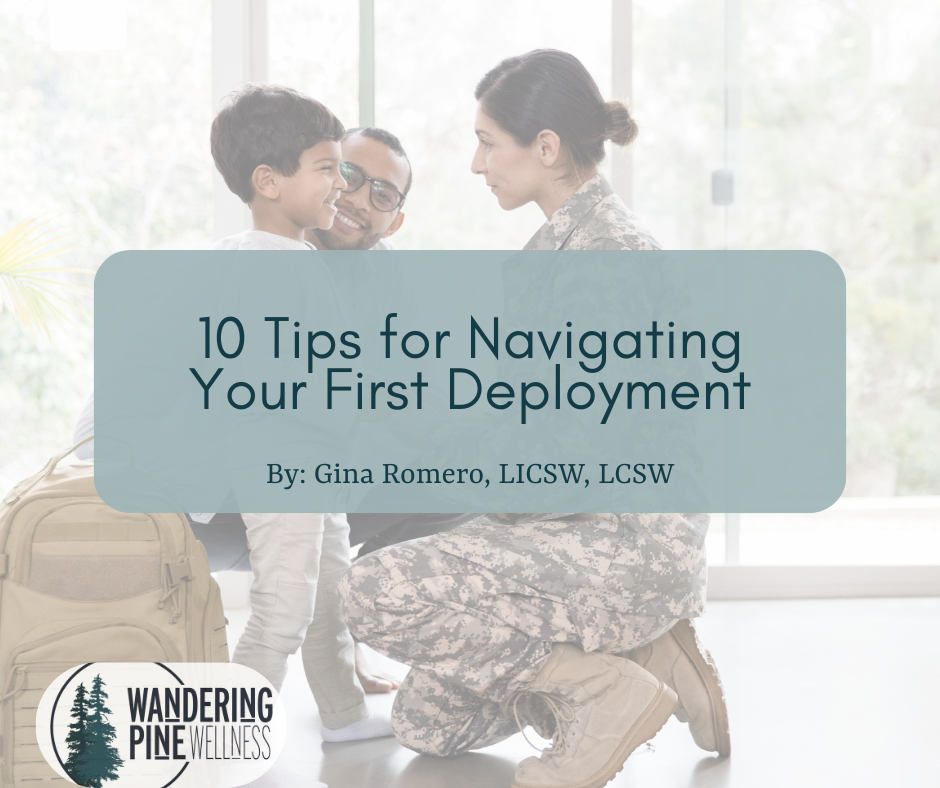
If you’re preparing for or currently navigating your first deployment, you’re likely looking for realistic advice--not motivational slogans or over-exaggerated blog posts.
By: Gina Romero, LICSW, LCSW. Current TRICARE provider and AD military spouse.
Your partner’s deployment can feel disorienting in ways that are hard to explain to anyone who hasn’t experienced it. For many military spouses and partners, it’s the first time daily life shifts from shared responsibility to managing everything alone. The silence in the house feels different. The routines feel heavier. Even simple decisions can take more energy than expected.
Here are some suggestions to help you get through:
1. Tell People Your Partner Is Deployed
When I married my spouse, most of the spouses I met had become acquainted with the military in the early 2000s. The rules and norms they learned reflected a very different time, and many of those expectations don’t fit our world today. I was told that I should never tell people my spouse was deployed or TDY, and I’ve found that just isn’t a useful way to live.
While you should still keep deployment details private, it’s okay to tell people that your partner is gone. You don’t need to protect others from this information. Saying your partner is deployed provides context for your availability, energy, and emotional bandwidth. It also prevents misunderstandings and reduces the pressure to repeatedly explain yourself.
2. Eat in Whatever Way Keeps You Fed
Cooking for one during deployment can be harder than expected. Grocery shopping, meal planning, and cleaning all take time and effort, and food waste can add up quickly.
If takeout helps you eat regularly, order takeout. I’m personally very pro-takeout.
3. Pay for Help When You Can
All of your shared tasks now belong to one person. Transporting kids, taking care of pets, cooking, cleaning-- It adds up quickly.
If you can afford help, you may consider outsourcing some services. You’d be surprised at how refreshing it feels to take just one thing off of your plate. Reducing repetitive tasks and small decisions can make a noticeable difference in your stress levels.
4. Stay Where You’re Stationed, If Possible
Leaving to stay elsewhere may feel comforting at first, especially during the early weeks. Over time, being away from your home base can create additional stress. Work routines, healthcare providers, pets, and daily structure are easier to maintain in your established environment. Going back home for an extended time can also unintentionally reinforce the reasons that caused you to leave in the first place. Remaining where you’re stationed often supports stability and smoother reintegration when deployment ends.
5. Go to Therapy
Have you heard of the book Go the F**k to Sleep that’s narrated by Samuel L Jackson? Well, now you have. And now you’re reading this tip as Go the Fuck to Therapy. You’re welcome.
But on the real, I highly recommend going the fuck to therapy. You don’t need a crisis to benefit from therapy during deployment. Having a consistent, confidential place to process what you’re carrying can be grounding.
Military OneSource can be a great option for deployment-related concerns on a short-term basis. If you’re hoping to use Tricare, you can read my blog to identify your next steps and better understand if you need a referral. Find my blog here: https://www.wanderingpinewellness.com/blog/do-i-need-a-referral-for-mental-health-with-tricare
More details:
Military OneSource
12 free counseling sessions (per issue) for service members and families.
No referral or diagnosis required.
➡️ militaryonesource.mil
Centerstone Military Services
Free, confidential mental health support for veterans, active duty, and families. ➡️ centerstone.org/military-services
Services depend on availability of providers, and are not always available
Vet Centers
Free counseling for veterans and their families, including marriage and family therapy.
➡️vetcenter.va.gov
6. Find One Thing You Like Doing Alone
If you don’t have kids, much of deployment is solitary. Having one activity that you’re excited to do alone can make the quiet more manageable. This could be anything from reading to crossfit or making art. It could also be a great excuse to try something new.
7. Expect Your Capacity to Change
Your energy and focus may fluctuate more than usual. Tasks that once felt manageable may take longer or feel heavier. Adjusting expectations can reduce unnecessary frustration. This season asks more of you mentally and emotionally.
8. Keep Your Routines Simple
Simple routines help anchor your days. Waking at a consistent time, incorporating movement, and maintaining a small evening ritual can provide structure when communication and timelines feel uncertain.
Simple systems tend to hold up better under stress than complex ones. I personally use Mariners baseball games to keep me on a routine. (Go Mariners!) I ensure that my work is wrapped up each night by the first pitch (and adjust as gametimes adjust), and I end my day when the game ends. Since weekends often feel more lonely, the games also give me something to look forward to on weekends.
9. Let Go of the Idea of Doing This “Well”
There’s no standard for handling deployment correctly. Sometimes you might just feel like shit, and that’s okay! Comparing yourself to other military spouses adds pressure that doesn’t serve you. And if any military spouses or partners in your social circle make you feel inadequate, they don’t deserve a place in your life. They’ll eventually PCS and won’t be in your life anyways.
10. Focus on Making It Through
This season doesn’t need to be transformative. You don’t need to take up 10 new hobbies, lose 20 pounds, or go vegan. Protecting your mental health and maintaining basic stability is enough.
Conclusion: Navigating Your First Deployment With Realistic Support
Seeking support, reducing unnecessary strain, and making practical adjustments can help you maintain stability throughout the separation.
If you’re currently coping with deployment stress, know that fluctuations in mood, energy, and motivation are common. Building simple systems, accessing therapy, and allowing yourself flexibility can create steadiness during this season. And remember–deployment eventually ends.

About the author: Gina Romero
Gina is a licensed clinical social worker (LICSW, LCSW) who brings both professional insight and personal experience to her work. As the spouse of an Active Duty Airman, she’s familiar with the challenges of navigating military life. Gina supports military spouses, active duty families, and veterans, focusing on ADHD, Autism, and chronic illness.
Read Gina’s full bio here: wanderingpinewellness.com/ginaromero